AC Repair, Tomball, TX
AC Repair When You Need It
All makes and models. Emergency calls answered after hours and on weekends, because a broken AC in Tomball in August does not wait for Monday morning.
Diagnostics and repair done right the first time
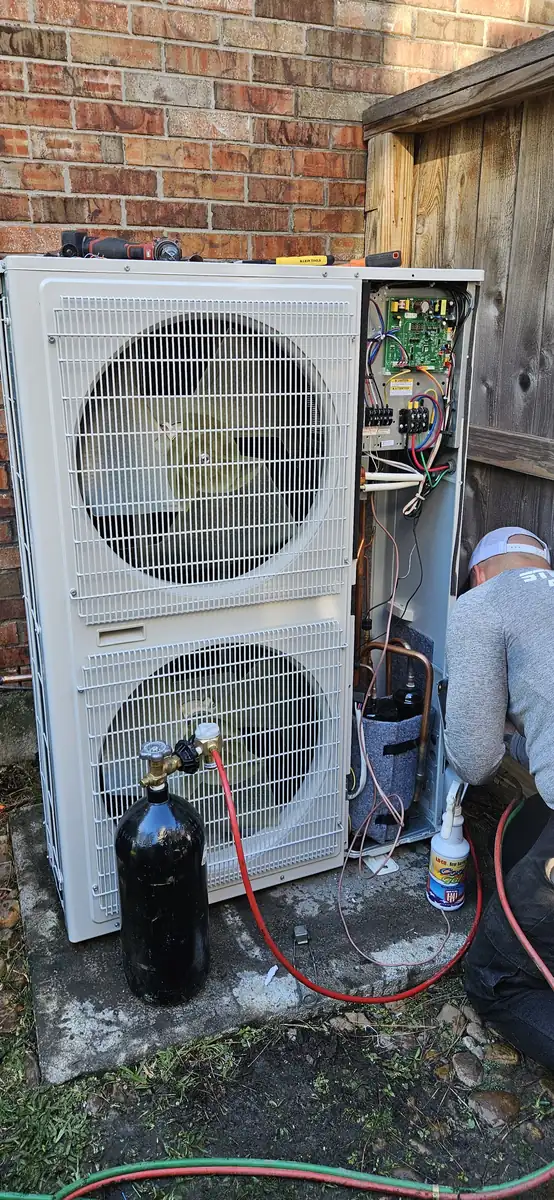
When your air conditioner stops working, the first thing that matters is how fast someone shows up and how straight they talk. At Steadfast AC Service, James Dillon built this company on the same values he carried as a firefighter: respond promptly, diagnose honestly, and do not leave until the problem is solved. The team handles repairs on all makes and models, whether your system is a week old or two decades out of the box. Every technician arrives with the diagnostic tools and training to identify the root cause, not just silence the symptom. Technicians Chris, Daniel and Nate have all been called out by name in reviews for tracking down problems that other companies missed or misdiagnosed. After-hours availability is real and confirmed by multiple customers. Erin Hennings noted that James came out late on a Sunday night and on Father's Day. Andrea Fabricius described James arriving after hours without hesitation, fixing the system that night, then returning first thing the next morning to verify the repair held. Michael Duddy had a tech on site within an hour when a heating unit failed in 23-degree weather, and Steadfast did not charge for the diagnostic visit when the answer turned out to be a thermostat the homeowner could source themselves. That kind of honesty is not common in the HVAC trade. It is how Steadfast has built a 5.0-star rating across 312 Google reviews since opening in 2018.
What to expect on a repair call
James or a technician arrives at the agreed time, same-day and after-hours when the situation calls for it. They walk you through what they find before any work begins. Repairs are priced honestly; if the answer is something you can handle yourself, they will tell you. The job does not close until the system is running and verified. If there is any doubt, a follow-up check is part of the process, not an upsell. Steadfast AC Service is licensed by the Texas Department of Licensing and Regulation under license Licensed (#TACLA166258C) and fully insured. Service area covers Tomball, Spring, Cypress, The Woodlands and Gleannloch Farms.
Steadfast AC Service. Licensed (#TACLA166258C) and fully insured. Firefighter-owned and built on honest service. Call (713) 303-4552.