Why Your AC Runs Nonstop in a Texas Summer (and When That Is Actually a Problem)
Constant cooling cycles are expected when it is 100 degrees outside, but a few warning signs mean your system needs a look.
August 27, 2026 · 4 min read
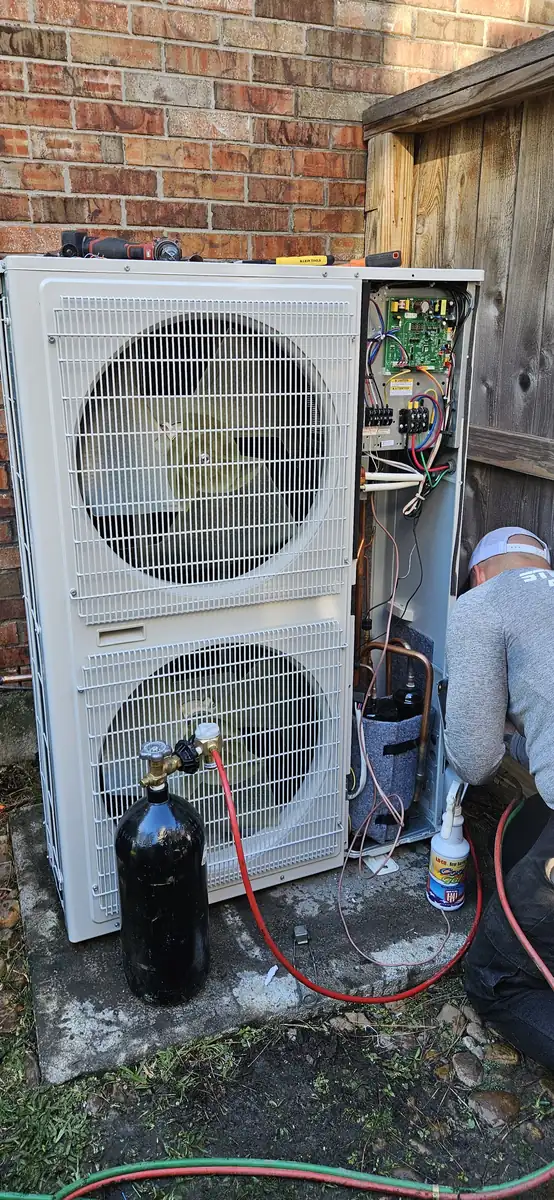
If your air conditioner seems to run all day without shutting off during a Tomball summer, you are not imagining it. The Houston area regularly sees heat indexes above 105 degrees, and a properly working system will cycle almost continuously to keep up. That is not a malfunction. That is your equipment doing exactly what it was designed to do.
The trouble is that "runs a lot" and "runs wrong" look identical from the thermostat. Knowing which one you are dealing with can save you a few hundred dollars in unnecessary service calls, or catch a real problem before it turns into a full system failure.
When Constant Running Is Normal
On days when outdoor temperatures climb above 95 degrees, most residential systems are sized to maintain a 20-degree indoor-to-outdoor difference. That means a system sized for a 75-degree interior will hit its design limit around 95 degrees outside. Above that, it is fighting against physics, and it will run without stopping. This is expected, and it does not mean anything is wrong.
The same is true right after you have been out all day with the thermostat set high. When you come home and drop the set point from 80 down to 72, the system has to pull the entire house down by eight degrees. That recovery period can take an hour or more, and the unit will run the whole time.
Signs That Point to a Real Problem
The red flags appear when the running does not make sense given the conditions. If your system has been running for several hours on a mild day, say 85 degrees outside, and the indoor temperature still has not reached your set point, something is wrong. Here are the most common causes:
- Low refrigerant. A slow leak means the system cannot absorb enough heat to cool effectively. The unit runs, the air moves, but the house stays warm. You might also notice ice forming on the refrigerant line near the air handler.
- A dirty evaporator or condenser coil. Coils coated in dust and debris lose the ability to transfer heat. The system works harder and longer for less output.
- A failing capacitor. Capacitors help the compressor and fan motors start and run. A weak capacitor causes the motors to draw more power and deliver less performance.
- Ductwork leaks. If conditioned air is escaping into your attic before it reaches your rooms, the system will run indefinitely trying to compensate for air it is losing.
- A system that is too small for the house. An undersized unit will run constantly and still never catch up on a hot day. This is a sizing problem, not a repair problem.
The Short-Term Cost of Ignoring It
A system running at full capacity for extended periods wears components faster. Compressors, capacitors, and fan motors all have rated cycle counts. When a low refrigerant charge or a dirty coil forces the compressor to work twice as hard, you burn through that service life in half the time.
Your electric bill is also a signal worth watching. If your July bill jumped significantly compared to last July and you have not changed your habits or thermostat settings, that extra runtime is showing up in kilowatt hours. A 4-ton system draws roughly 4,000 to 6,000 watts per hour. An extra four hours of daily runtime in a month adds up fast.
What to Check Before Calling
There are a few things worth checking yourself before scheduling a service call. First, look at the air filter. A filter that has not been changed in three or four months can restrict airflow enough to cause the symptoms above. Replace it and give the system 30 minutes to see if anything improves.
Second, walk outside and look at the condenser unit. Clear any grass clippings, weeds, or debris from around the sides and top. The condenser needs airflow to reject heat. A unit surrounded by overgrowth will struggle in Texas summers.
Third, check every supply and return vent in the house. Closed or blocked vents restrict airflow through the system and can cause the evaporator coil to freeze, which looks and feels like a refrigerant problem even when it is not.
When It Is Time to Call
If the filter is clean, the vents are open, conditions outside are moderate, and the house still will not reach set point after a few hours, it is time for a professional diagnostic. A technician can check refrigerant charge with gauges, measure coil temperatures, test capacitors, and inspect ductwork. Most problems that cause constant running have a clear diagnostic path.
Steadfast AC Service has been serving the Tomball and greater Houston area since 2018. James and his team are available for after-hours calls when your system picks the worst possible moment to stop cooling. If you are unsure whether what you are hearing is normal, a quick call at (713) 303-4552 can usually settle it without a truck roll.
Steadfast AC Service — (713) 303-4552
Call (713) 303-4552More articles
What the Refrigerant Transition from R-410A to R-454B Means for Your Next AC Replacement
The refrigerant your next system uses has changed, and understanding the difference will help you ask better questions when it is time to replace.
Five Signs Your Air Handler Needs Attention Before It Fails
The air handler is the indoor half of your cooling system, and catching problems early is almost always cheaper than waiting for a breakdown.